
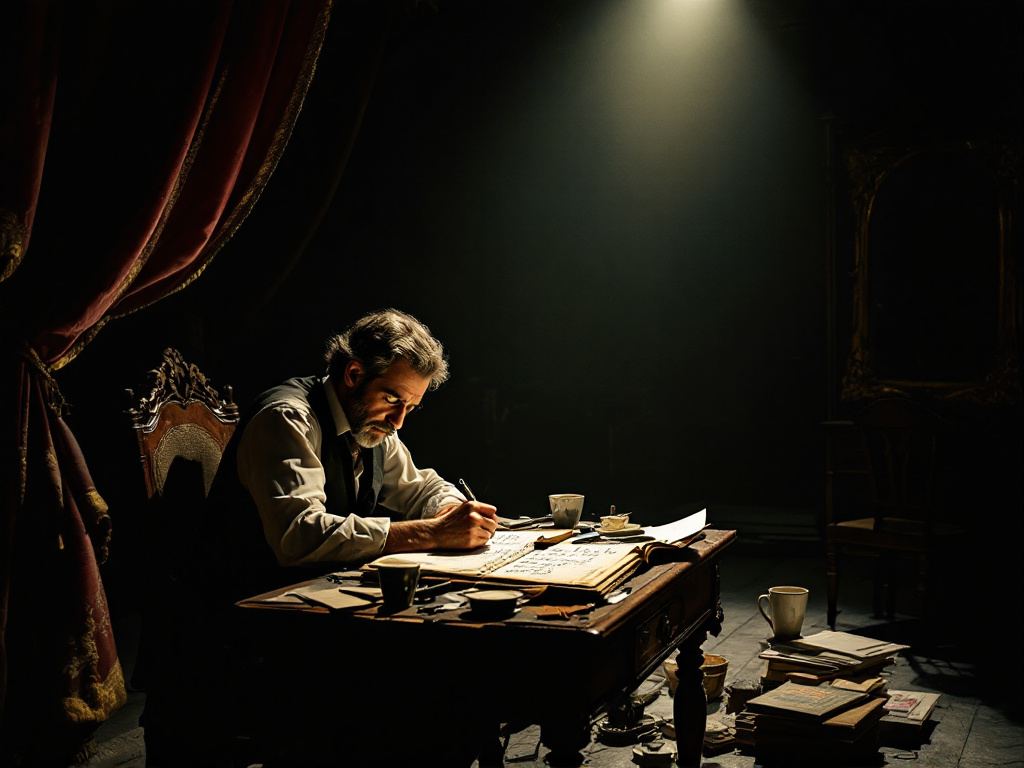
Writing a play is a unique challenge that requires a deep understanding of dialogue, character development, and stage direction. Unlike novels or screenplays, plays are meant to be performed in real-time, with live actors and minimal cuts or transitions. A great script captivates the audience through compelling characters, engaging dialogue, and a well-structured narrative.
In this guide, we’ll explore essential tips for playwrights to craft engaging and memorable stage plays.
1. Understand the Medium
Playwriting differs from other forms of storytelling. Unlike novels, which can explore a character’s thoughts in depth, or movies, which rely heavily on visuals, plays focus primarily on dialogue and performance. Everything—plot development, emotion, and pacing—must be conveyed through spoken words, gestures, and stage movement.
Before writing your script, watch and read as many plays as possible. Pay attention to how playwrights use dialogue, stage directions, and character interactions to bring stories to life.
Key considerations for stage writing:
- Live performance limitations: You have no editing, special effects, or cinematography to enhance the story. Everything happens in real-time.
- Scene transitions: Unlike films, plays often have minimal scene changes. Avoid frequent location shifts unless they serve a purpose.
- Audience engagement: Unlike books or movies, where audiences passively consume the story, stage plays rely on live energy and interaction.
2. Create Compelling Characters
The best plays revolve around strong, memorable characters. Your audience will spend the entire production watching these people interact, so they need to be fully realized and engaging.
Tips for crafting strong characters:
- Give each character a clear objective (what do they want?).
- Ensure characters have distinct voices (no two should sound alike).
- Develop strong conflicts between characters to drive the narrative.
- Consider backstory and motivation, even if it’s not explicitly mentioned in the play.
Example: In Arthur Miller’s The Crucible, the characters’ desires—power, love, revenge, or survival—drive the entire plot forward.
3. Master the Art of Dialogue
Since plays rely heavily on dialogue, mastering its rhythm and purpose is key. Unlike natural conversations, theatrical dialogue is deliberate, dynamic, and revealing.
Effective stage dialogue should:
✅ Sound natural but have a purpose (every line should advance the plot or character development).
✅ Include subtext—characters don’t always say exactly what they mean.
✅ Avoid excessive exposition (show rather than tell).
✅ Use pauses and beats for tension and emphasis.
Example: In Samuel Beckett’s Waiting for Godot, much of the dialogue revolves around seemingly mundane conversations, but beneath the surface, it explores deep existential themes.
4. Structure Your Play Effectively
Most plays follow a three-act structure, though some use a two-act or one-act format. Understanding pacing and structure helps keep the audience engaged.
Traditional Three-Act Structure:
- Act 1: The Setup – Introduces characters, setting, and conflict.
- Act 2: The Conflict Escalates – Challenges intensify, stakes rise.
- Act 3: The Climax & Resolution – Tension peaks and conflict is resolved.
If you’re writing a one-act play, you still need a clear beginning, middle, and end but in a more condensed form.
5. Utilize Stage Directions Wisely
Stage directions describe how actors should move, react, or deliver lines, but they should be concise and meaningful. Overuse of stage directions can be restrictive, limiting actors’ ability to interpret the characters.
✅ Use clear, actionable stage directions (e.g., “She hesitates before answering.”)
✅ Avoid micromanaging emotions (let actors bring their own interpretations).
✅ Keep descriptions minimal (focus on essentials).
Example: Instead of writing:
“John angrily slams his fist on the table, gritting his teeth as his face turns red with rage,”
try:
“John slams his fist on the table.”
Actors and directors will interpret and bring the scene to life in their own way.
6. Set the Scene with Minimalism in Mind
Since theater relies on physical sets, consider how many scene changes your play requires. Unlike film, where settings can change frequently, stage plays benefit from simplicity and flexibility.
- Limit scene changes to avoid disrupting the flow.
- Use props creatively to transform spaces.
- Let dialogue fill in the details instead of relying on elaborate scenery.
Example: In Our Town by Thornton Wilder, the entire play is performed with minimal set pieces, relying on dialogue and movement to establish the setting.
7. Build Conflict and Tension
Great drama thrives on conflict. Conflict can be internal (a character struggling with their emotions) or external (a character battling another person or society).
Consider:
- Person vs. Self (internal struggle)
- Person vs. Person (rivalries, love triangles, revenge)
- Person vs. Society (oppression, justice, rebellion)
Example: In Hamlet, Shakespeare masterfully layers multiple conflicts—Hamlet vs. Claudius, Hamlet vs. himself, and Hamlet vs. fate.
8. Consider the Rhythm of Your Scenes
Pacing is crucial in live theater. If a scene drags, the audience loses interest. If the pacing is too fast, the story feels rushed.
- Alternate between tension and release (high-energy scenes followed by quieter moments).
- Use monologues sparingly—they should reveal deep character insights, not just dump information.
- Break up long conversations with movement to keep the action engaging.
Example: In Death of a Salesman, Arthur Miller skillfully shifts between past and present, speeding up and slowing down the emotional weight of the scenes.
9. Think About the Audience’s Experience
Unlike a novel, where readers can go back and re-read sections, a play moves forward in real-time. Your dialogue and action must be clear and engaging enough to be understood in the moment.
- Avoid overcomplicating plots—keep the core story easy to follow.
- Write for performance—test your dialogue by reading it out loud.
- Make every moment count—audiences can’t pause or rewind!
10. Edit and Workshop Your Script
Theater is a collaborative art form, so don’t be afraid to workshop your play with actors, directors, or fellow writers. Hearing your script out loud will help you refine the dialogue, pacing, and flow.
✅ Read your script aloud—does the dialogue sound natural?
✅ Have actors perform scenes—are there moments that feel awkward or slow?
✅ Revise ruthlessly—cut unnecessary dialogue, scenes, or characters.
Playwriting is both an art and a craft. A well-written play relies on compelling dialogue, strong character dynamics, and a deep understanding of live performance. By focusing on authenticity, pacing, and audience engagement, you can create a script that not only reads well but comes alive on stage.
So, whether you’re writing a dramatic tragedy, a lighthearted comedy, or an experimental one-act, keep these principles in mind to create an unforgettable theatrical experience!
 Written